


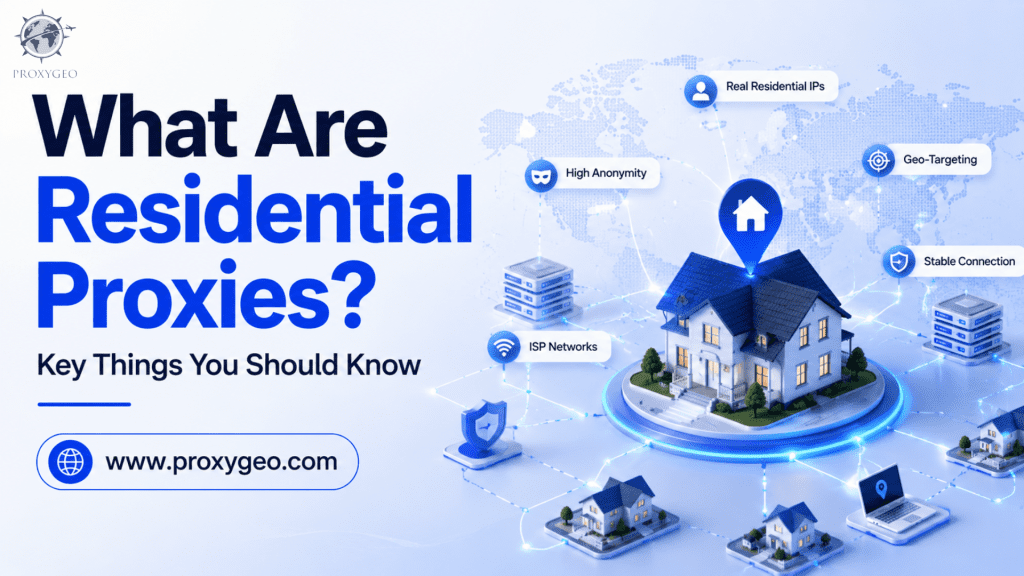
In recent years, proxies have become increasingly familiar to many people. Each type of proxy has different purposes. And when it comes to large-scale web data collection, residential proxies are the first name that comes to mind. This guide will cover how residential proxies work, why they are difficult to detect, and the most common use cases for them. We will also show you how to choose a reliable residential proxy provider. Let’s dive in.
What Are Residential Proxies?
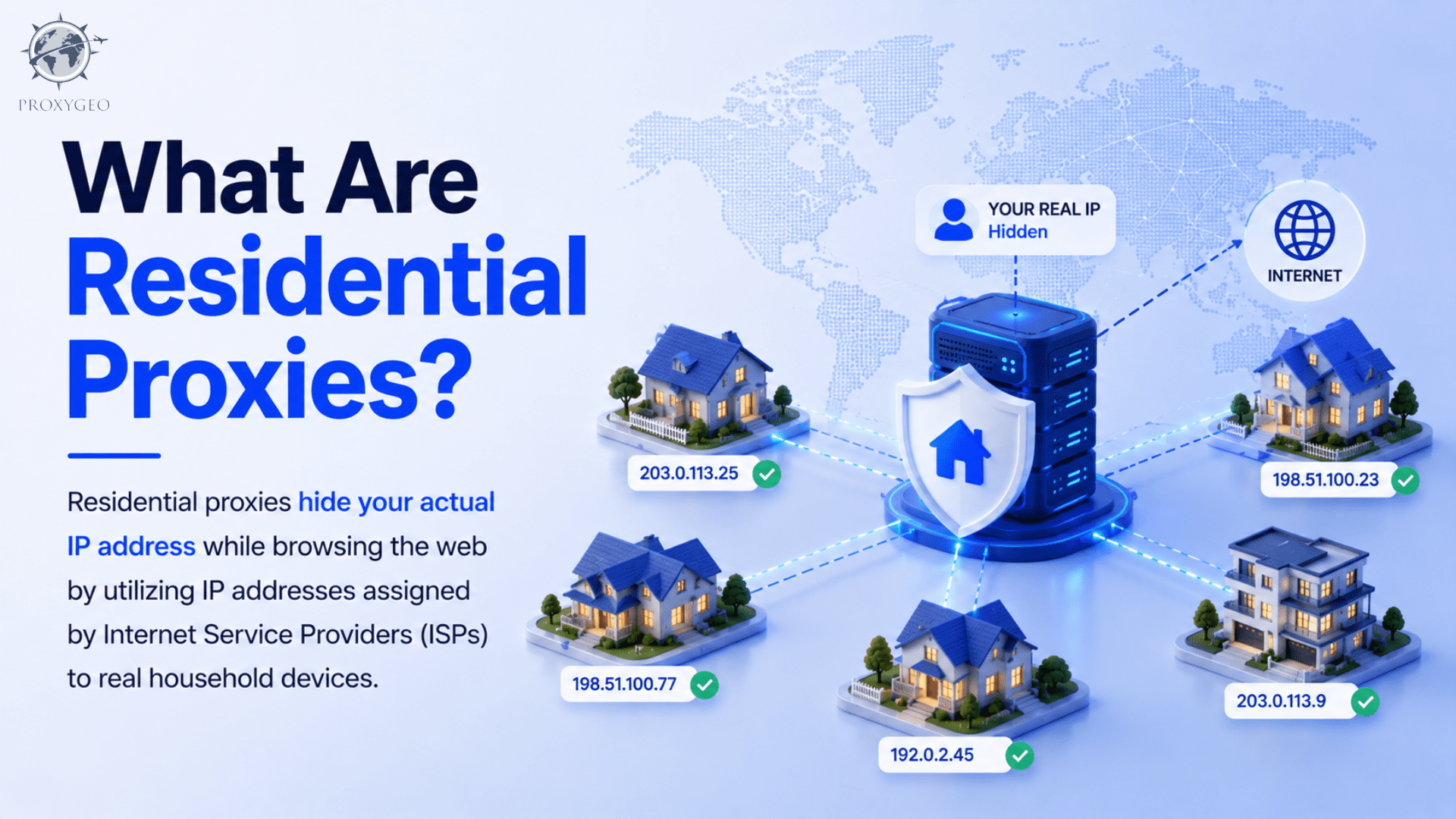
By nature, residential proxies hide your actual IP address while browsing the web by utilizing IP addresses assigned by Internet Service Providers (ISPs) to real household devices. When using a residential proxy to access websites, your requests are routed through a residential IP before reaching the target website.
To make it easier to understand, imagine you are in Vietnam and using a US residential proxy to access a website. In this case, the residential proxy works as follows:
- First, the proxy assigns you an IP address connected to a real household network in the US.
- When you access a website, your request is no longer sent directly from your device; instead, it goes through the proxy server first. Your real IP address in Vietnam is hidden and replaced with a residential IP from the US.
- Websites see your masked residential IP address and assume it belongs to a real user, making you less likely to get blocked. Then, data from the website is forwarded back to you by the proxy.
Sounds great, right? But what exactly makes residential proxies difficult to detect? We will explore that in the next section.
What Makes Residential Proxies Hard to Detect?
Residential proxies are popular due to their naturally difficult-to-detect nature. Below are the main reasons why residential proxies are more difficult to detect than other types of proxies.
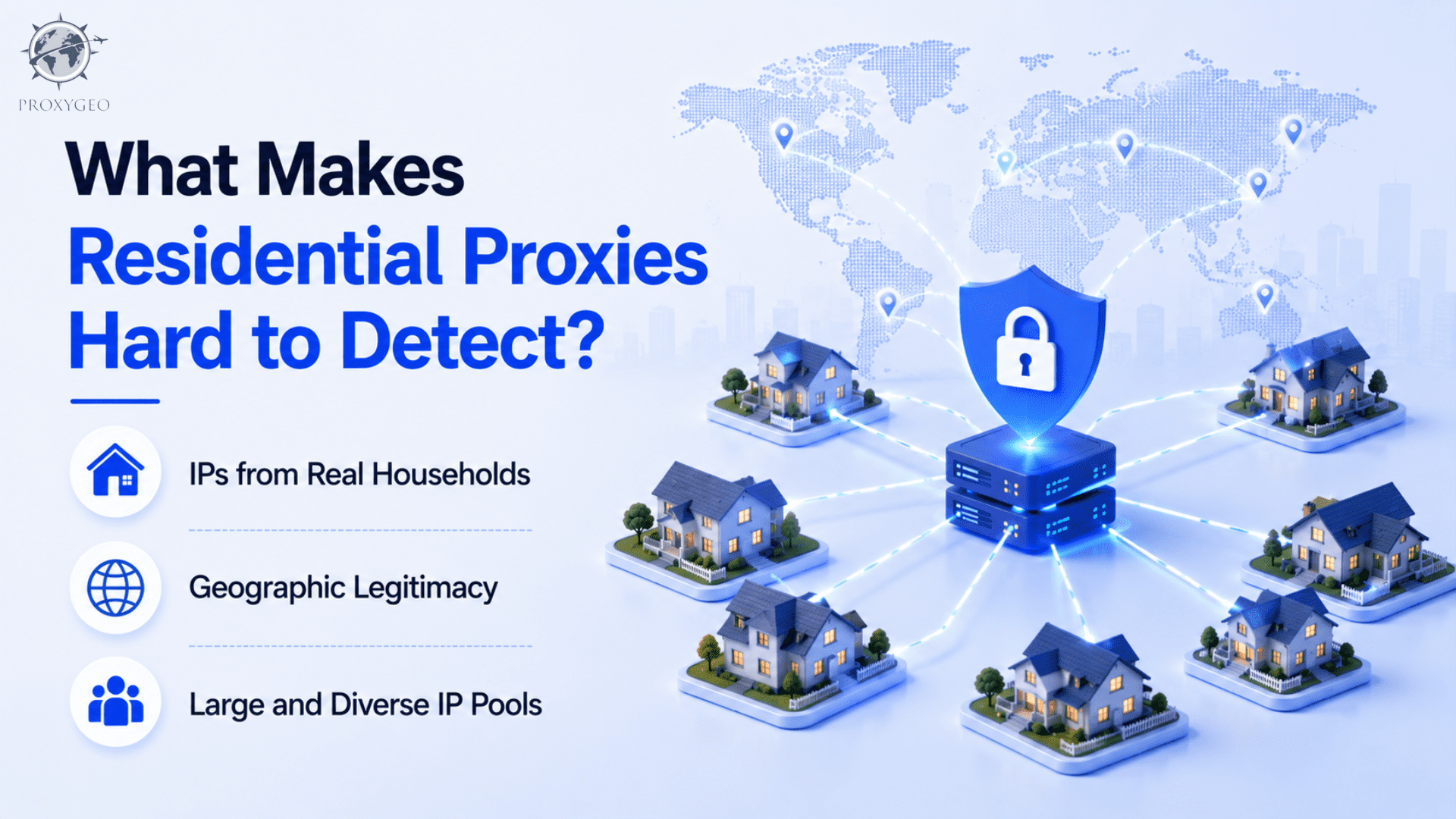
1. IPs from Real Households
What kind of IP address is hard to detect? Obviously, the more it resembles how a normal user accesses the internet, the better. And residential proxies do this very well. As mentioned, residential proxies use real IP addresses assigned to households by Internet Service Providers (ISPs). To most systems, these IP addresses are more like those of a typical internet user rather than traffic generated by bots or automation tools. As a result, residential proxies help reduce the chances of IP bans, constant CAPTCHA requests, restricted access, and being flagged as suspicious traffic.
2. Geographic Legitimacy
Residential proxy packages often allow users to select IP addresses by country, making internet traffic appear more geographically natural. For example, if someone wants to access content intended for the US market, using a US residential proxy makes websites believe the user is genuinely browsing from that region. Unlike datacenter proxies, which are easier to identify as fake traffic, residential IPs usually have more natural geographic information, making them less suspicious in some cases.
3. Large and Diverse IP Pools
Many residential proxy service providers own millions of rotating IP addresses, even unlimited proxy pools. This enables internet traffic to be distributed more naturally rather than repeatedly using only a few fixed IP addresses. If too many activities originate from the same IP address in a short time, systems may quickly flag it as suspicious behavior. Conversely, when requests are spread across multiple IP addresses, browsing activity looks more like real user behavior. And the more similar the behavior resembles real user behavior, the harder it is for the system to detect.
Do Residential Proxies Have Any Limitations?
Residential proxies are indeed difficult to detect, but that does not mean they are without limitations. In fact, this type of proxy still has some restrictions that users should be aware of before using it.
1. No Encryption
Unlike reliable VPN services, residential proxies only hide your IP address and do not encrypt your data during transmission. Because of this, residential proxies are not the best choice if you prioritize security or full encryption of your online activity.
2. Higher Cost
Residential proxies use real IP addresses assigned to households. In reality, these IP addresses are much more complex to collect and manage. Providers need to establish large, stable residential IP networks that are distributed across various regions. That is also why residential proxies are generally more expensive than others.
3. Configuration Complexity
Although proxy providers have improved the user experience, residential proxies can still be difficult for beginners. Setting up or rotating residential proxies may require additional technical knowledge. If configured incorrectly, performance may become unstable or even increase the chances of getting flagged by websites and online platforms.
What Are Residential Proxies Commonly Used For?
Residential proxies are one of the most widely used proxies. So, what do people typically use residential proxies for?
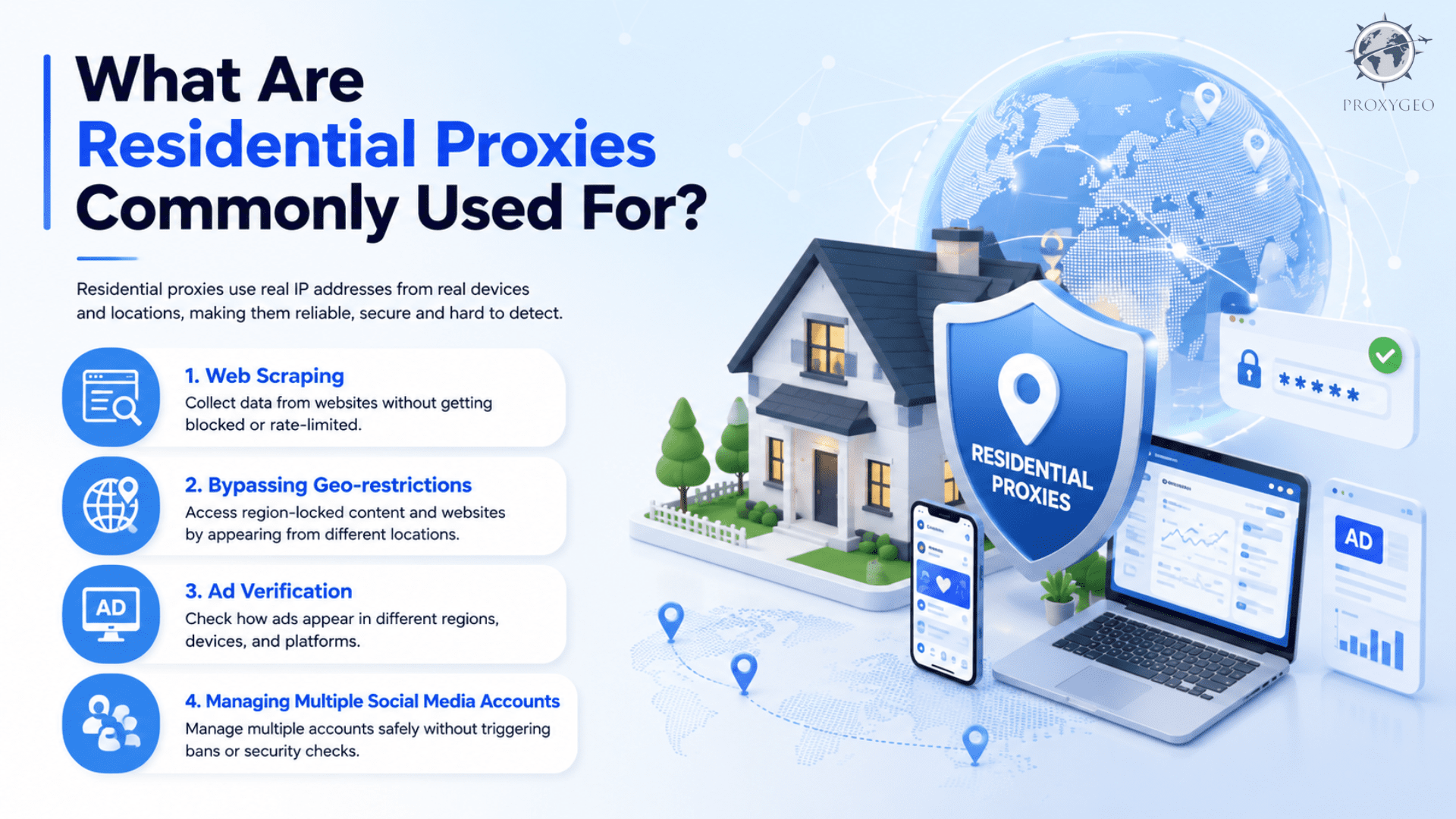
1. Web Scraping
Data collection has never been an easy task. You often face challenges such as anti-scraping systems blocking your requests or websites banning your IP address, especially when sending too many requests within a short time. That is why people usually use residential proxies for web scraping. Residential proxies rotate IP addresses, simulating the behavior of multiple users accessing a website from different locations. As a result, websites have a much harder time detecting your activities. At the same time, you can collect large amounts of data without interruption.
2. Bypassing Geo-restrictions
Some platforms, websites, major news publishers, and online services are only available in specific regions. If your location is not supported, accessing that content or service can become difficult. Residential proxies are designed to bypass geographic restrictions, no matter where you are. With residential proxies, you merely choose an IP address from your desired country and gain access to geo-restricted content. Since your real IP address is hidden, websites believe you are browsing as a legitimate user from that specific country.
3. Ad Verification
It is crucial to monitor advertising campaigns to ensure everything is running properly. But how do you check ads running in different countries or regions? Residential proxies are a common solution for this. It hides your real location, allowing you to check how your ads are displaying in other markets and whether they are being delivered to the right audience. This makes it easier to identify issues and make necessary adjustments before they affect campaign performance.
4. Managing Multiple Social Media Accounts
If you are managing multiple accounts on platforms such as Facebook, Instagram, or Twitter, logging into all of them from the same IP address is often not feasible. These platforms frequently flag accounts that share the same IP address because it can appear suspicious or automated. This is another reason why numerous users rely on residential proxies. With diverse IP addresses, residential proxies enable each profile to operate under a separate IP address. As a result, managing multiple social media accounts becomes safer and more natural, since platforms see them as different users operating from different locations.
How to Choose the Right Residential Proxy Provider
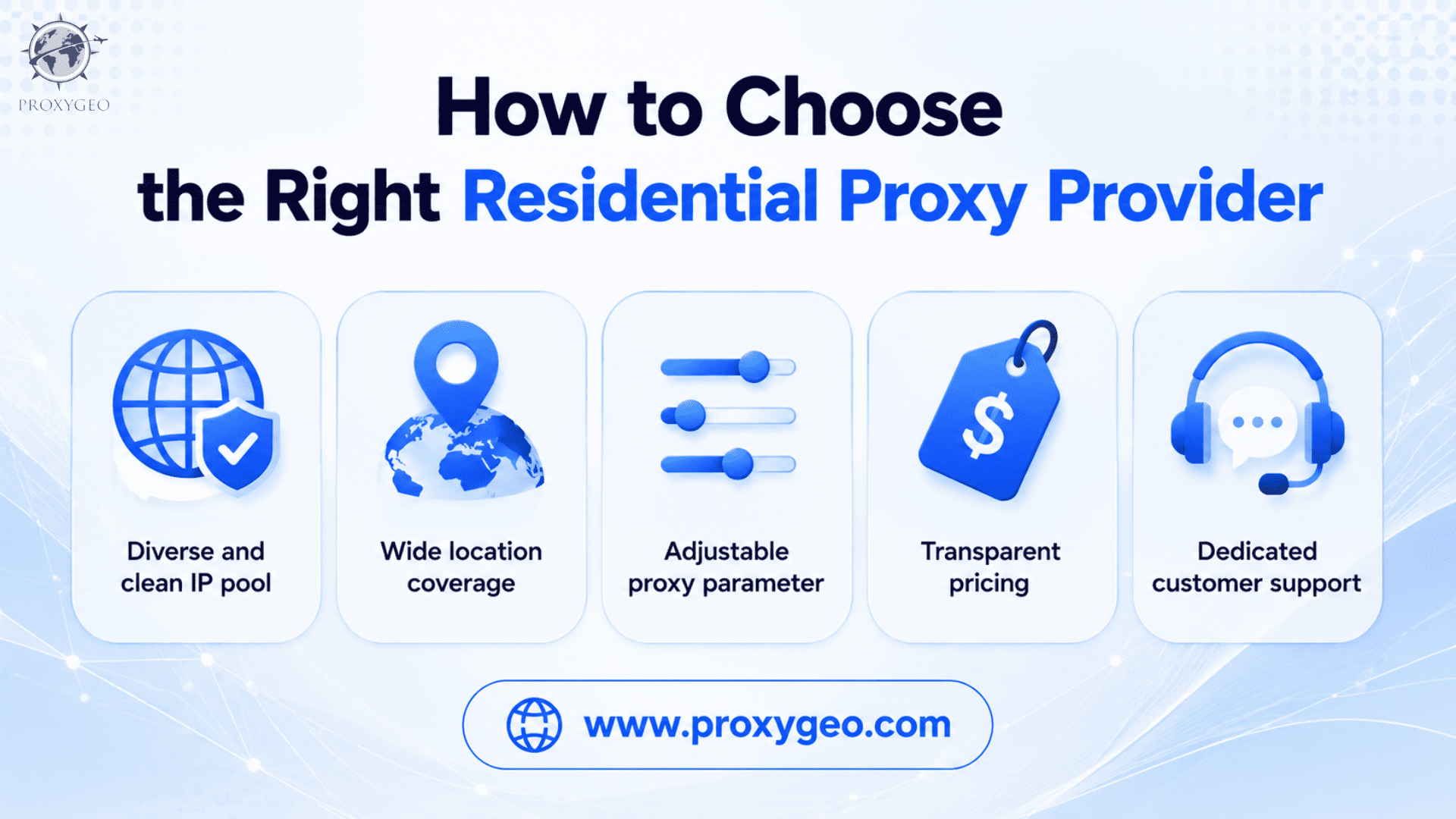
Residential proxies can bring great benefits, but a bad one will not. Not all residential proxy providers offer the same level of quality. Therefore, partnering with the best residential proxy provider to suit your needs is crucial. Here are some things you should look for:
1. Diverse and Clean IP Pool
A large and diverse pool of IP addresses ensures you can access proxy servers from various geographic locations. The more clean IP addresses they deliver, the lower the chance of being detected. Additionally, it is ideal to look for units that commit to 99% or higher uptime.
2. Wide Location Coverage
If you need IP addresses from specific countries or regions, ensure the provider supports them. Ideally, they should cover as many regions as possible.
3. Adjustable Proxy Parameter
It is always better to prioritize providers that allow users to customize proxy settings, including country selection, ISP selection, proxy formats, and proxy rotation options. This helps you choose the setup that best fits your needs.
4. Transparent Pricing
Price is important, but don’t just opt for the cheapest package to save money. Nor should you select the most expensive package, thinking it is the best. There is no benefit in buying the cheapest proxy package if it lacks the features you actually need. Likewise, paying for features you never use is unnecessary. Instead, carefully review the features included in each plan and choose the one that best matches your real needs.
5. Dedicated Customer Support
A good seller does not just sell good products; they also care about their customers. Look for providers that offer quick support and clear guidance to help you get started and use everything more easily.
With all the key factors involved in selecting a reliable residential proxy provider, ProxyGeo is a name worth considering. With years of experience in the industry, ProxyGeo offers a wide range of high-quality proxy services and flexible plans designed for diverse use cases. Whether you need residential proxies or other proxy solutions such as rotating proxies, static proxies, or YouTube proxies, ProxyGeo provides a variety of options to fit your needs. Visit proxygeo.com today and find the right proxy solution for your next project.
Thank you for taking the time to read this article.
For more information, please contact us at PROXYGEO.
